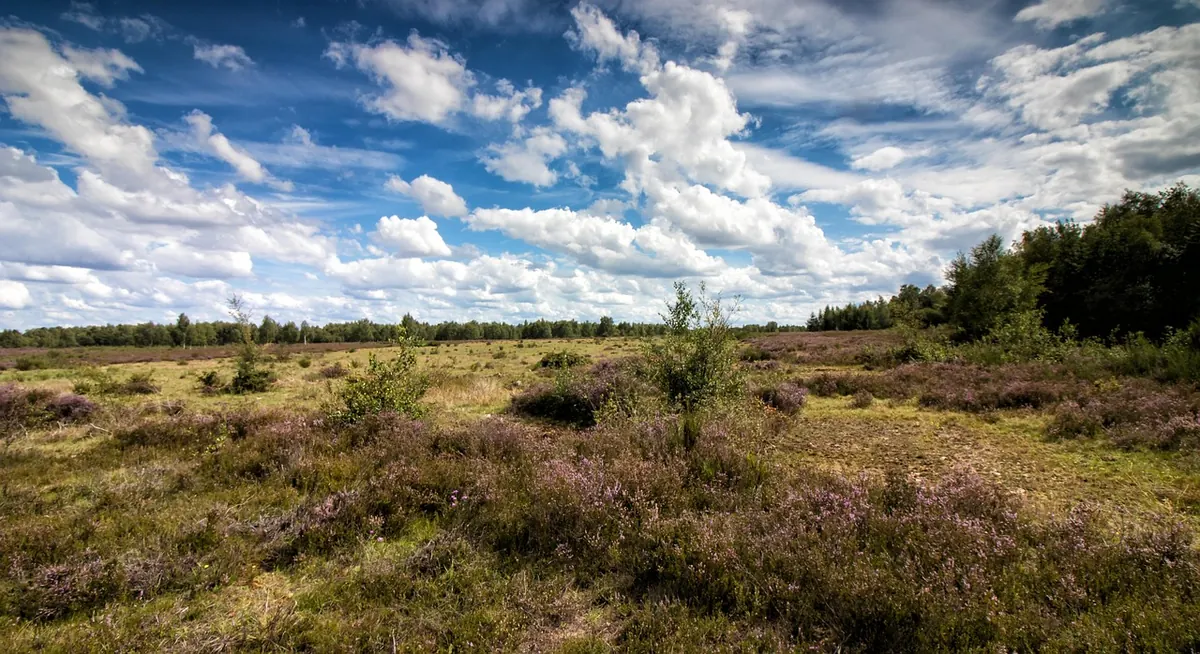
Out on the heath in February, the ground can look like a brown rug nobody has bothered to shake out. Six months later, the same few acres will be purple to the horizon, loud with bees and full of churring nightjars. Lowland heath changes more dramatically through the year than almost any other habitat in northern Europe, and knowing what happens when turns a pleasant walk into an actual plan. Here is the calendar, month by month, so you can time a visit for the heather, the nightjars or the first hard frosts.
January and February: dormancy, roosts and long views
Winter strips the heath back to its bones, which is exactly why it is worth visiting. Bracken has collapsed, grass is grazed short, and low light rakes across boundary banks, old peat cuttings and pillow mounds that summer growth hides completely. Gorse often carries a scatter of yellow flowers through the cold months, and the coconut scent carries on still days.
This is roost season. Short-eared owls hunt low over rough grass at dusk, and in some areas hen harriers and merlins come in to communal roosts. Stonechats and Dartford warblers hold territories on the driest heather, snipe and jack snipe sit tight in the wet flushes, and woodcock fly out to feed at last light. Look for tracks in frost and mud—deer, fox, rabbit—and listen for the soft fluting song of a woodlark, which can start as early as January.
March and April: first reptiles, first songs
Adders are the headline act. On the first mild, sunny mornings they emerge from hibernation and bask on south-facing banks, usually within a few metres of dense heather or a bramble edge. Give them room; they are shy, protected and quick to slip away. Sand lizards follow, and the bare sandy patches between heather clumps are exactly where they need to be left alone.
Birdwise, the year turns fast. Skylarks climb and sing, curlew and lapwing return to the wet heath and mire, and willow warblers and chiffchaffs arrive from the south. Green hairstreak butterflies appear as gorse comes into full flower, and the first emperor moths fly on sunny afternoons. Ground-nesting birds are settling now, so keep dogs on a lead and stay on the main paths from March onwards.
May and June: the nesting peak
This is the busiest six weeks of the heathland year. Nightjars arrive in May and start churring at dusk, clapping their wings and giving a sharp kewick from a birch stump. Woodcock roding over the treeline at last light is a reliable sight on many sites. Tree pipits parachute onto saplings, stonechats and whinchats fledge young, and cuckoos call from the scrubby edge where heath meets woodland.
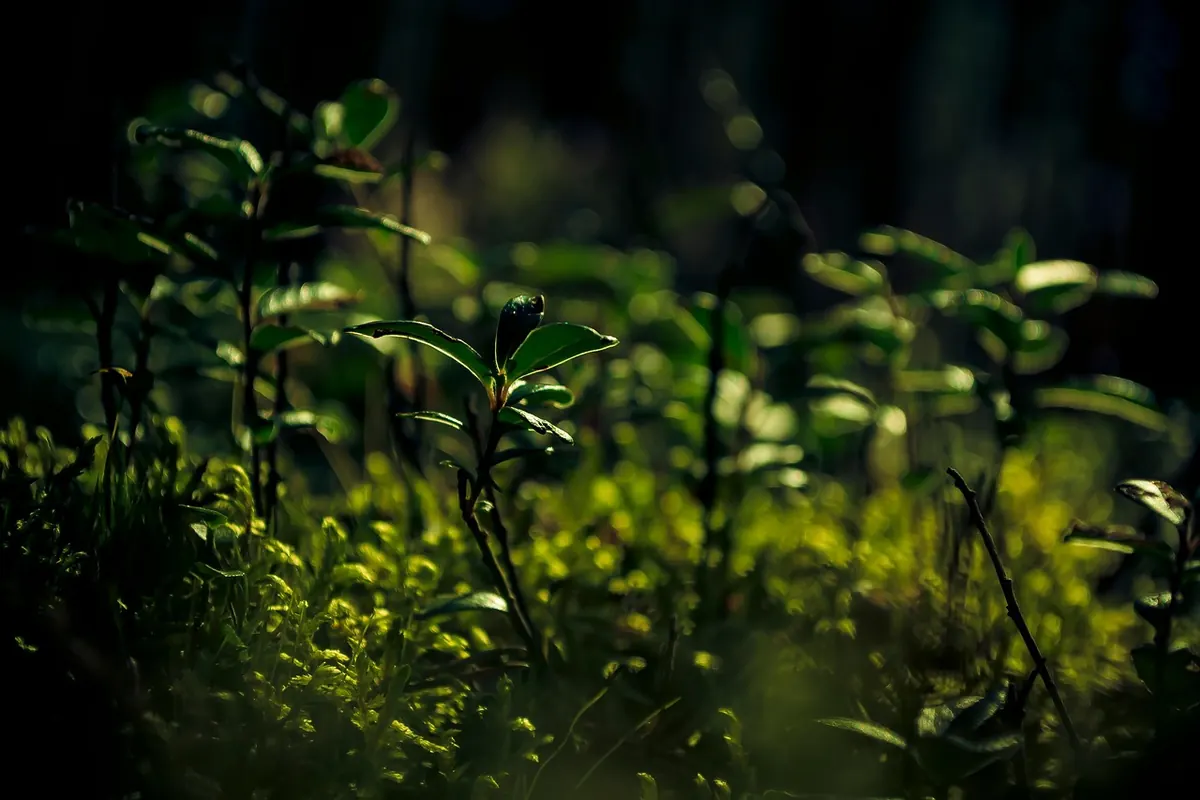
Plants catch up too. Cotton grass whitens the wet hollows, bilberry flowers under the pines, heath spotted orchids open in the damper grass, and bell heather gives the first flush of pink. Silver-studded blues are on the wing by mid-June, usually close to the ants' nests they depend on in bare ground. This is the worst time of year to wander off-path: one footstep can flatten a nest or a lizard's egg-laying site.
July and August: the purple weeks
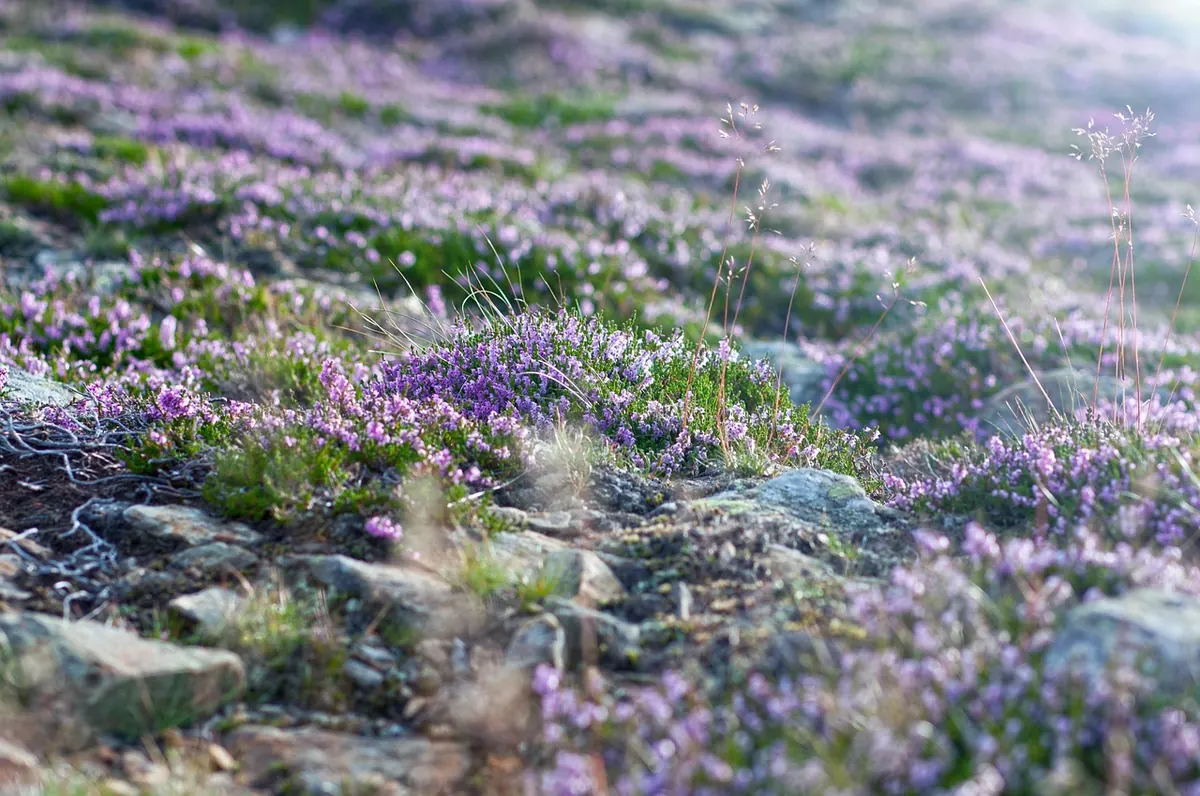
Ling heather opens from mid-July and holds into September, while bell heather usually peaks a few weeks earlier. Where the two grow side by side you get the colour shift—magenta fading into lilac—that people travel for. On wet heath, bog asphodel adds yellow spikes, and the pale pink bells of cross-leaved heath mark the boggiest ground underfoot.
Insect life is at its loudest. Bumblebees work the heather, keeled skimmers and black darters patrol the pools, and grayling, dark green fritillaries and late silver-studded blues flit over open ground. Hobbies hunt dragonflies along the treeline. If you see patches of heather turning brown and grey in high summer, that is often heather beetle stripping a stand, a normal part of the cycle rather than a disaster.
September and October: berries, fungi and departures
Fruit dominates. Rowan, hawthorn and blackberry ripen along the edges, and sloes on the blackthorn are best left for the birds and the first frosts. Fungi push up after rain: fly agaric under the birches, boletes in damp woodland margins, and waxcaps on short, unimproved turf. Waxcaps are a sign that ground has never been ploughed or fertilised, so photograph them rather than pick them.
The summer visitors go. Nightjars, tree pipits and whinchats leave, while redwings, fieldfares and bramblings arrive from the north. Red and fallow deer rut on wooded heath edges in October—listen for roaring at dusk and keep well back. Bracken turns bronze, then rust, and is cut or rolled on many sites to stop it swamping the heather.
November and December: winter roosts and wet boots
The roosts return and the views open up again. Short-eared owls hunt over the rough grass, hen harriers come in to winter roosts, and merlins dash after meadow pipits. Snipe feed in the soft flushes, woodcock are back in the birch scrub, and stonechats and Dartford warblers stay put—though a long run of hard frost can hit the warblers badly.
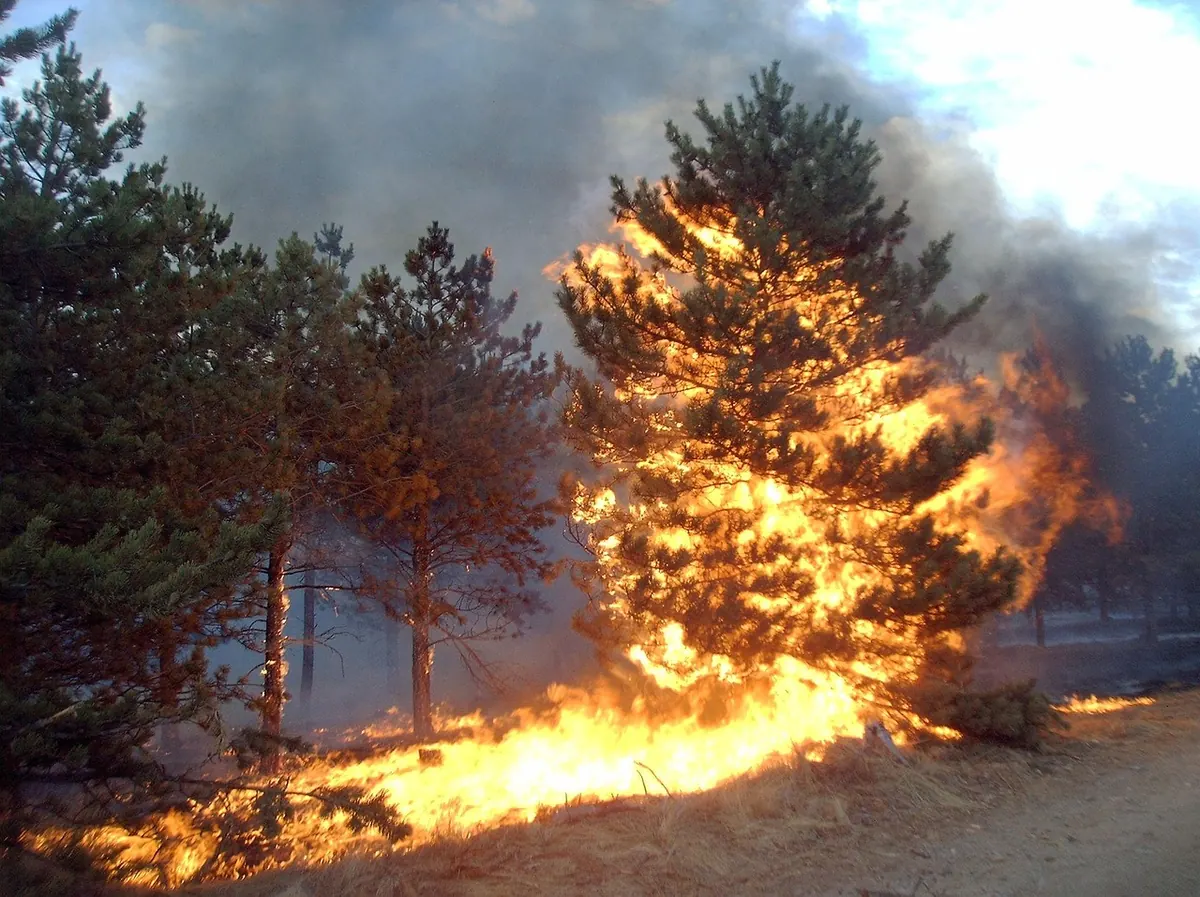
Gorse often flowers again on mild days, and with the leaves gone you can read the structure of a heath properly: lichens on old posts, mosses in the wet, and the patchwork of different-aged heather stands created by grazing, cutting and burning. Adders and lizards are underground now, so leave brash piles and log stacks where they are.
Planning a visit: what to take and what to leave behind
Timing beats luck on a heath. Dawn and the last hour before dark are almost always better than the middle of the day, and a still, warm evening after rain is the best chance of hearing nightjars or watching hobbies. A few habits make every visit easier:
- Footwear and clothing: sturdy boots for wet flushes and mires, long trousers tucked into socks in summer, and a windproof layer, because exposed heaths are colder than the car park suggests.
- Dogs: on a lead from March to July for ground-nesting birds, and around livestock at any time of year.
- Kit: binoculars, a torch with a red filter for dusk, and a hand lens for lichens, mosses and sundew.
- Paths: stay on them across wet heath. Bog mosses and sundews are easily crushed and slow to recover.
- Leave no trace: no fires or barbecues, take litter home, and never dig up plants or fungi.
- Check the notices: many sites close small areas for breeding, and grazing or controlled burning may be under way in winter.
- Ticks: heathland is tick country. Check yourself afterwards, and if you develop a rash or feel unwell following a bite, speak to a doctor.
Heaths are not wilderness. They exist because people grazed, cut and burned them for centuries, and they survive today only where that work continues. Knowing the calendar means you arrive at the right moment—and notice the management that keeps the whole thing going.
Photo: herbert2512 / Pixabay