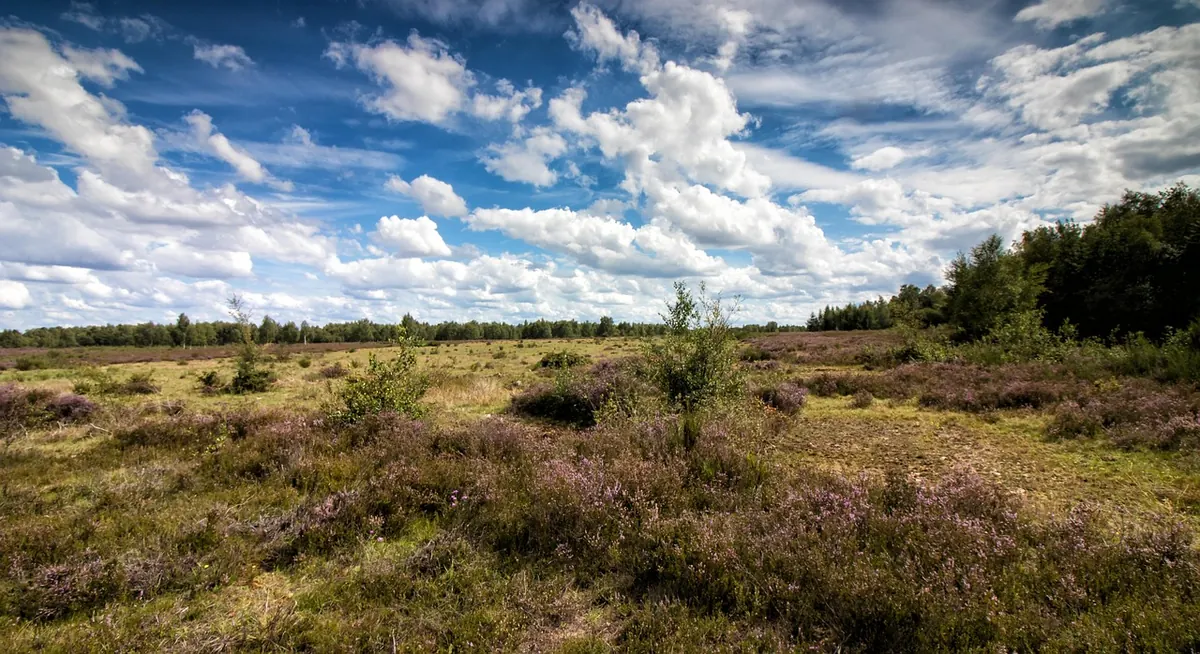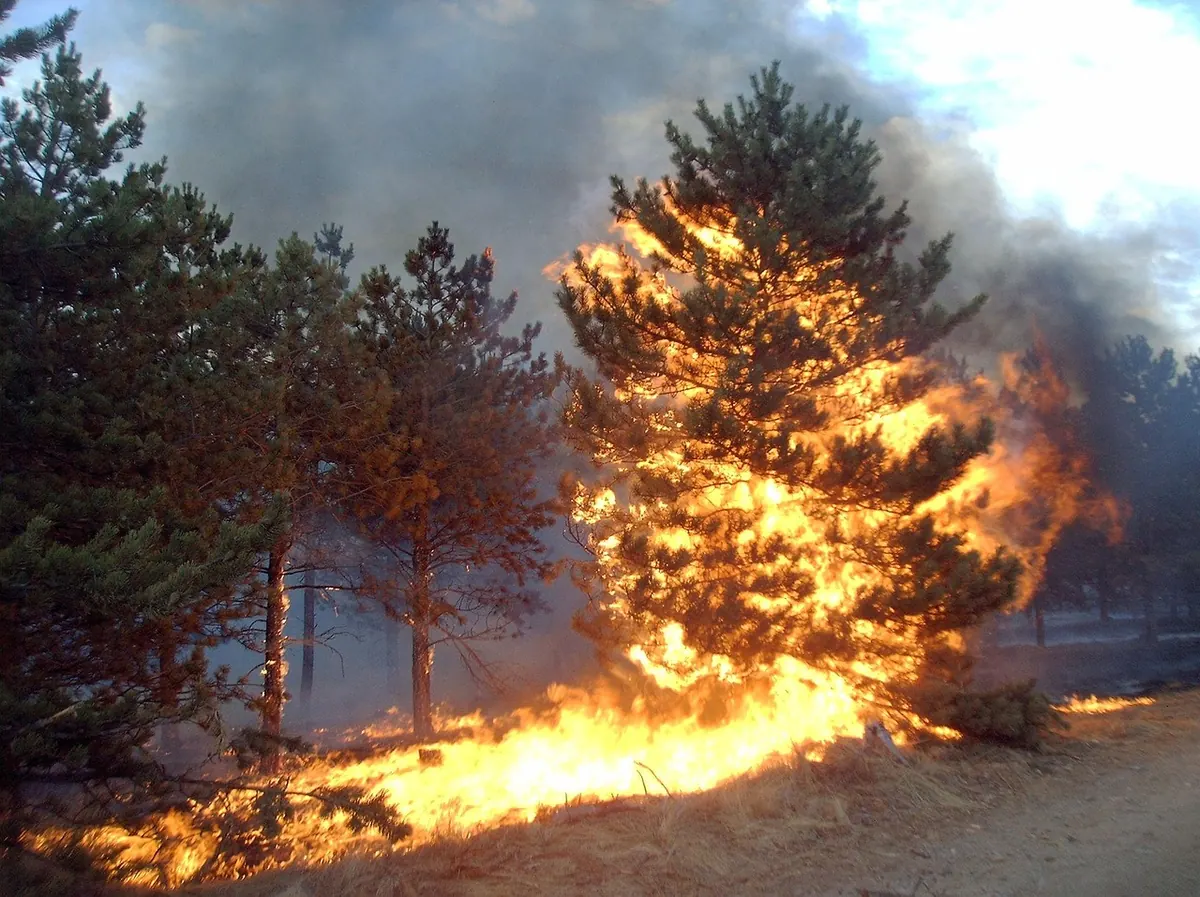
From a car park, a heath that has been open for eight hundred years and one bulldozed clear eighteen months ago can look almost identical. Both turn purple in August. Both hum with bees. Both feel wild and empty and old. The difference only shows up when you get your boots dirty: in the shape of the ground, the state of the stones, the depth of the soil, and the way the heather is put together. None of these clues is proof on its own, but three or four together will usually tell you whether you are standing on history or on a clearing.
Read the ground before the plants
Vegetation is the loudest signal and the least trustworthy. Heather recolonises fast when conditions allow, and grass, bracken and birch move in even faster after disturbance. A heath that was cleared will hide behind a convincing purple skin within a few years.
Ground shape is slower to lie. Ancient heath tends to be lumpy and irregular, and once you start noticing why, you cannot stop. There are low mounds where turf was cut, hollows where sand or gravel was dug, humps left by old rabbit warrens, faint trackways worn by carts and livestock, and soft ridges from hand-dug drainage. Recently cleared ground tends to be flatter and smoother, with straight edges, clean arcs where a bucket turned, and the tidy parallel lines of machine-cut grips.
Walk a slow transect with your eyes on your feet for fifty metres. Micro-relief is one of the most reliable age clues there is.
Boundary banks: the oldest lines on the map
Earth banks are the single best place to start. Across much of northern Europe, heathland edges are marked by banks and ditches that follow parish, manor, common or township boundaries, and some of those lines are centuries old. Others are the remains of prehistoric field systems whose walls have melted into low, soft ridges.
Age shows in the profile. An old bank has rounded off. Its sides slope gently, the ditch beside it has silted and softened, and the whole thing carries a continuous turf cap of heather, bilberry, moss and lichen running unbroken across the top. You often find veteran trees, coppice stools or old hedge lines sitting on it. Crucially, the bank ignores modern field layout: it runs across the contour, cuts through later boundaries, or links up with other earthworks in a pattern that makes sense only at a landscape scale.
A bank thrown up by recent clearance looks entirely different. The material is loose and stony, the sides are steep, bare subsoil shows through, roots stick out of the face, and there is brash caught in the angles. Weathering takes decades; you can usually spot a new bank from ten paces.
Stones, lichen and the value of slow things
Stones are witnesses. On old heath you find them earthfast: half sunk, level with the soil surface, occasionally rocking slightly but clearly settled. Lichen grows across them in mosaics, with different species layered over one another, and moss and heather press right up against their edges.
Disturbed stones give themselves away. They sit proud on the surface. There are fresh white scars where a blade scraped them, and the newly exposed face carries no lichen at all. The soil around them is still crumbly and loose rather than knitted together by roots and fungal threads.
Be careful how hard you lean on lichen as a clock. Growth rates vary enormously with species, climate, aspect and pollution, so treat it as a comparison, not a stopwatch. A stone carrying dense, layered, maturing lichen has been quiet for a long time; a stone with only a few grey-green specks on one side has not.
Cut a small slice and look at the soil
This is the most decisive test, and it takes two minutes. Push a spade in, lift a slice about the size of a book, and look at the cut face. Then put it back and press it down.
Long-undisturbed heath on sandy ground develops a podsol, and the profile is unmistakable:
- A dark, fibrous surface layer of partly rotted heather litter, sometimes thickening into peat in wet hollows.
- Below it, a bleached, ashy grey horizon that looks almost like pale sand.
- Then a thin, hard, reddish-brown or black band where iron and organic matter have collected — an iron pan.
- Under that, the original sandy subsoil.
That bleached layer and pan take a very long time to form. If they are there, the ground has been left alone for centuries at least. Recently cleared ground gives you a shallow, muddled profile instead: topsoil mixed into subsoil, no bleaching, no pan, roots and fragments of brash scattered through it. Watch out for one lookalike — a compaction layer from machinery tyres. It sits flat and dense at spade depth, but it is not cemented or layered the way a true iron pan is.
Heather has a lifespan, and it shows
Heather goes through a cycle: pioneer, building, mature, then leggy and degenerate. Old, lightly managed heath usually has several stages side by side, giving a patchy, uneven texture with gaps, moss, bare ground and woody, lichen-covered stems in the older stands. That raggedness is a good sign.
Recently cleared or burned ground produces the opposite: a dense, even-aged flush, uniform in height, with no gaps and no old stems. Look too for the species that take their time returning — bell heather, cross-leaved heath, dwarf gorse, bog asphodel, sundew. When they are present and thriving alongside the heather, the open ground is likely to be long established.
Signs of recent clearance
If you can tick several of these, be sceptical about the site's age:
- Straight, machine-cut edges and clean curves where a bucket swung.
- Brash, chippings and crushed stems in windrows or heaps.
- Bright bare subsoil and a thin, mixed soil profile.
- Loose stones sitting on the surface with fresh scars.
- Wheel ruts, compacted tracks and new drainage grips.
- A flush of grass, bracken, willowherb, birch and willow seedlings.
- Little lichen on stone or wood, and no moss mats.
- Even-aged regrowth with no gaps and no old leggy stems.
A practical routine for a first visit
Do it in this order and you will build a picture quickly:
- Walk the boundary before you walk the middle. Look for banks, ditches, veteran trees and old wall lines. Cross-check the shape against an old map if you can.
- Choose two or three spots and study the ground surface: embedded stones, moss mats, lumps and hollows.
- Cut one small slice at each spot. Look for bleaching, pan and peat. Replace the turf.
- Assess the heather. Even or patchy? Any old, woody, lichened stems?
- List what else is growing, especially the slow colonisers.
- Add context from local records — commons registers, tithe and enclosure maps, historic environment records.
On a scheduled monument, a nature reserve or private land, do not dig without permission; let your eyes do the work instead.
Age is a jigsaw, not a switch. One bank, one lichened stone or one spadeful of bleached sand proves very little. But when the earthworks, the stones, the soil profile and the plants all point the same way, you can be reasonably confident about what you are standing on — and you will start noticing the places that are far older than they look.
Photo: -MECO- / Pixabay